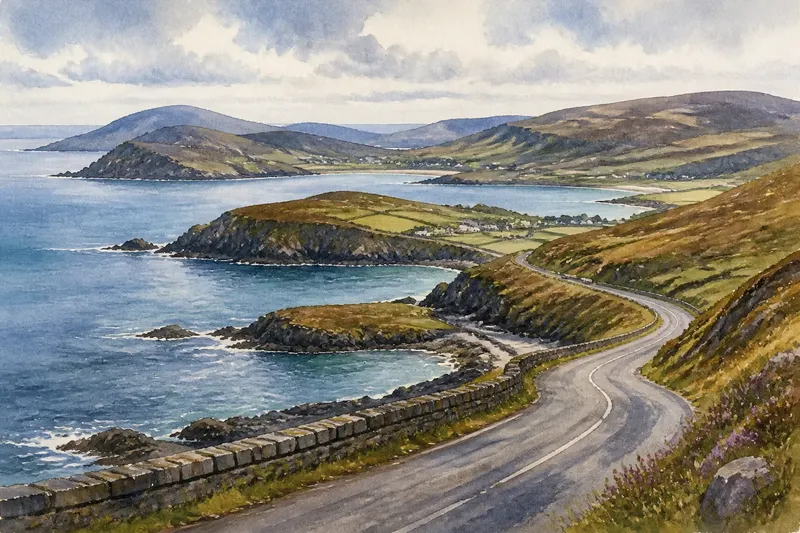
A Northern Trip Packing Checklist That Leaves Room in Your Bag
Use this northern trip packing checklist to choose clothes for your actual plans, keep useful items within reach, and avoid carrying duplicate outfits.
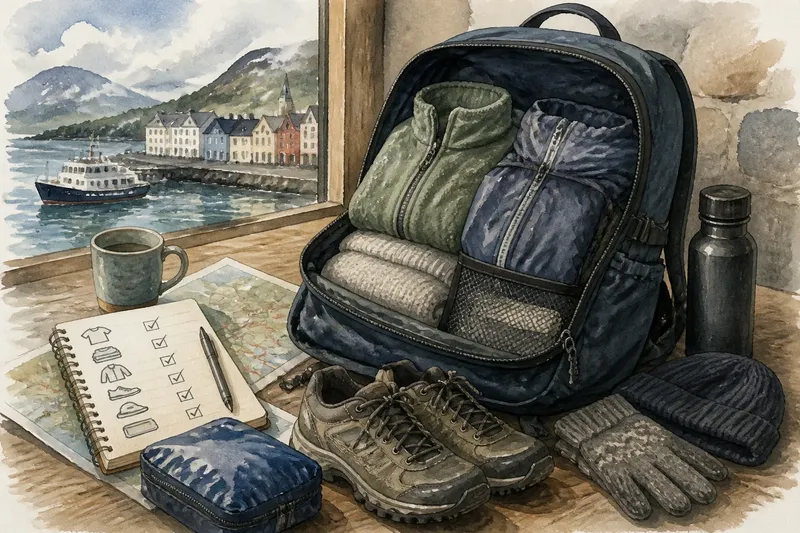
What should you pack for a northern trip when the forecast keeps changing? A northern trip packing checklist works best when it starts with your itinerary and the clothes you already trust, not a separate outfit for every weather symbol. The aim is to carry a few pieces that suit the places you’ll visit and keep the ones you may need easy to reach.
Start with your itinerary
Write down the day’s actual stops: perhaps a ferry terminal, a town walk, a museum, and dinner. Mark which stretches are outdoors, where you can shelter, and whether you’ll carry a day bag. This turns “maybe rain” into a more useful question: will you be outside for a long stretch, or moving between covered places?
Pack around those transitions. A shell that fits over your usual sweater may cover a breezy walk and fold away for a café, while a second coat meant for one uncertain forecast may take up space without solving a distinct need.
Choose compatible pieces
Use clothing you know feels comfortable in motion. A sweater that scratches, a jacket that pulls across the shoulders, or trousers that restrict your stride can become a distraction on a day that includes stairs, transit, and walking. If you’re considering something new, wear it with the rest of the outfit and your bag before the trip.
Check how the pieces fit together: put on the base layer, add the warm layer, then try the shell. Reach forward as if taking a ticket from a machine, and put on your backpack. If sleeves bunch or straps rub against a collar, change the combination before packing it.
Think of the outfit like a set of nesting bowls: each piece should fit with the others, rather than compete for the same space. The items need not all be technical clothing. Choose materials and cuts that suit your own comfort and the activities on your route.
Use a packing checklist
Lay out the items you are considering, then check each one against a specific part of your itinerary. For every item, decide what you’ll do if it serves a distinct need and what you’ll do if another piece already covers that job.
- Base layer: Check that it is comfortable for the planned walk; if it is, pack it, but if it chafes or feels clammy, choose a familiar alternative.
- Warm middle layer: Check that it fits under your shell; if it does, keep it in the outfit, but if it bunches, choose a thinner or better-fitting layer.
- Outer shell: Check whether it blocks the wind or rain your outdoor plans may bring; if it suits those conditions, pack it, but if it does not, choose protection appropriate to the outing.
- Footwear: Check that your shoes suit the surfaces and walking you expect; if they do, wear or pack them, but if not, choose a pair suited to the route.
- Hat or gloves: Check whether an exposed stretch makes either useful; if so, put the relevant item in your bag, but if the route is mostly sheltered, leave unnecessary accessories behind.
- Spare top: Check whether your plans call for a change of clothes; if they do, pack one, but if your existing layers cover the day, avoid a duplicate.
- Damp-item pouch: Check whether you may need to separate wet clothing from dry belongings; if so, bring a small waterproof pouch, but if not, keep the bag space for something you will use.
Say you have a hypothetical day with a waterfront walk, a bus ride, and a gallery visit. Your starting items are a long-sleeved shirt, a fleece that fits beneath a packable shell, walking shoes suited to the route, and a bulky second coat. First, you check the shirt and fleece together and find they allow comfortable movement; you keep both. Next, you put on the shell over the fleece and find the combination fits, so you pack the shell near the top of your bag. Then you check the walk and gallery portions of the itinerary: the shoes suit the walk, and the gallery is an indoor stop, so you keep the shoes and leave the second coat out because it duplicates the shell-and-fleece combination. The resulting tradeoff is one less backup outfit, with the useful layers still available for the exposed part of the day.
Keep the day bag orderly
Put the likely adjustment near the top of your bag: perhaps the shell, a warm layer, or gloves that match your route. A small dry pouch can keep damp clothing apart from a notebook or spare shirt. The point is to find what you packed without unpacking everything on a bench or bus seat.
Leave space for things that support the day, such as water, a snack, a map, or a small purchase. If the bag is already crowded with clothing, remove the items that duplicate a job before you sacrifice something you expect to use.
Questions about packing
Do I need a separate rain outfit?
Check whether your usual layers fit beneath a shell and suit the length of your planned outdoor time. If conditions call for more protection than that combination provides, choose rain clothing and footwear suited to the outing rather than packing an unrelated spare outfit.
What if the forecast changes?
Look at the itinerary again and identify which outdoor stretch has changed. Adjust the relevant layer or accessory; a different forecast does not automatically require replacing every item in your bag.
Should I bring new technical clothing?
Try it at home with the other layers and the bag you intend to carry. If it restricts movement or feels uncomfortable, choose familiar clothing that suits the planned activity instead.
How many backup layers belong in my day bag?
Choose the adjustment that matches the route, such as a shell for a stretch exposed to wind or rain. If a warm layer already covers the likely change, leave another piece out rather than carrying one for every possibility.
Make the final edit
Before closing your bag, look for duplicate jobs: two sweaters you would not wear together, or several tops intended for the same indoor stop. Keep the comfortable item that best fits the plan. If an item has no clear use on the itinerary, leave it out.
This northern trip packing checklist is most useful when it helps you choose, not when it grows into a catalog of possible weather. Keep the forecast in view, but give the last word to your route, your comfort, and the pieces you can reach when plans shift.