A Midwinter Daylight Walk, Planned Around the Bright Hours
Plan a midwinter daylight walk around the brightest hours, time a winter walk for unhurried landscape watching, and choose a clear point to turn back.
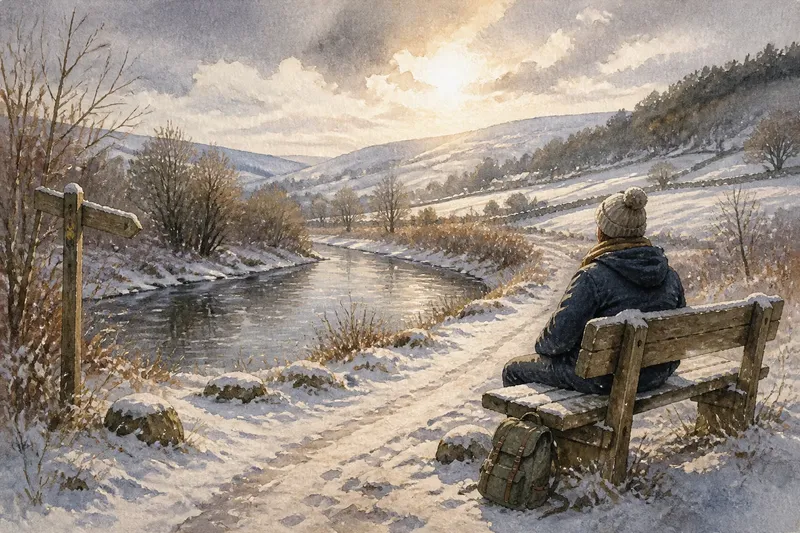
How can you fit a satisfying winter walk into the daylight without spending the whole time checking your watch? Plan the midwinter daylight walk around the hours when the landscape is easiest to see, and give the walk one clear focus: perhaps a river bend, a line of distant hills, or the changing color of snow.
That focus helps with timing. Rather than stretching a short day with extra distance, choose a place to pause and look closely, then arrange the walk so you reach it while the light is still useful.
Find the bright hours
Check local sunrise and sunset times, then look at an hourly forecast for cloud and precipitation. Midday often brings the brightest light, but a wooded valley, a steep slope, or a built-up street can feel dim earlier than an open field.
Think of winter light as a small window on a wall: the view changes as the sun moves, and the best part may not last. Save the stretch you most want to see for the middle of your outdoor time, rather than leaving it until the walk back.
Use sunset as a planning boundary for the main walk, not as a cue to hurry. Leave room for slower footing and small pauses, and remember that dense cloud can make the useful viewing light fade before the official sunset.
Time a winter walk
Choose a route that lets you spend the brightest part of the day walking at a comfortable pace, not rushing to reach a distant viewpoint. A short marked path near a village can be more rewarding than a longer route if it gives you time to notice the landscape.
Before leaving, check the map for places where you can pause without blocking the path and for a clear point to turn back. If you want to watch a river or look across an open hillside, plan that stop for the brighter middle of the day; keep the return straightforward.
Say you have a late-morning start, a marked riverside path, and a sheltered bench near a bend you want to watch. You set out toward the bench, pause there while the light is strongest, then return along the same path. If cloud thickens before you arrive, you turn around at a signed junction instead; the result is a shorter walk and a familiar return rather than a rushed attempt to reach the river.
Make pauses count
A winter walk does not need a long indoor stop to feel complete. A brief pause at a sheltered spot can give you time to look at the view, check the light, and decide whether to continue as planned.
For a warm indoor break, choose a café, visitor center, or public indoor space that is actually open that day. Check its hours before setting out, and treat it as an option rather than the hinge on which the whole walk depends.
At any pause, notice whether you are comfortable enough to keep walking and whether the landscape is still easy to read. If you are tiring or the light has dropped, shorten the outing and head back by the clear route you chose beforehand.
Keep the walk observable
Winter walking can reward attention to small changes: frost holding in the shade, a stream visible between bare branches, or the way a low sun picks out a path edge. Give yourself permission to stop briefly for these details without turning every pause into a photo session.
Use a simple decision check before each new stretch. If the path ahead is visible and you remain comfortable, continue to the next landmark; if the route becomes hard to read or you feel chilled, turn back or choose the nearer sheltered exit.
Questions about daylight?
What time is best for a winter walk?
Start early enough to settle into the walk before the brightest part of the day, then place your main viewing stop around midday when local conditions permit. Check the forecast and the terrain, since cloud and nearby slopes can change how much useful light reaches the path.
Can I enjoy a walk on an overcast day?
Yes, if the route remains easy to follow and you are comfortable with a softer, less contrasting view. Favor familiar paths with clear markers, and shorten the walk if details become difficult to see.
How long should I pause to watch the landscape?
Pause long enough to look properly and stay comfortable, then check whether the light and your energy still suit the next stretch. A short, attentive stop may fit a winter day better than waiting so long that the return feels rushed.
What if the light fades sooner than expected?
Turn back at the next clear decision point or use the nearest familiar exit rather than pressing on for a particular view. If you feel unwell, cannot stay warm, or are unsure of the route, seek a safe way back and ask for help if needed.
Choose a clear stopping point
Before setting out, pick a landmark that will mark the end of the outward part of your walk: a bridge, a bench, or a bend in the path. If you reach it while the landscape is still visible and feel comfortable, pause and take in the view; if not, turn back at an earlier marked point.
For a midwinter daylight walk, timing is less about fitting in more ground than giving your chosen place enough attention. Check local light conditions, walk toward one clear point, and leave yourself the option to return before the landscape slips out of view.